The Art of the Mask: How Precision Plugging and Taping Protect Your Complex Parts
In the realm of high-precision metal finishing, the difference between a functional component and a scrap part often comes down to a fraction of a millimeter. For complex geometries: particularly those destined for the aerospace, medical, and defense sectors: the anodizing process is rarely a "submerge and forget" operation. Instead, it requires a sophisticated strategy of selective finishing known as masking.
Masking is the technical practice of protecting specific areas of a metal part from the electrochemical effects of the anodizing bath. Whether the goal is to maintain tight tolerances in threaded holes, preserve electrical conductivity for grounding points, or ensure proper fitment of mating surfaces, precision masking is a critical prerequisite for quality. At Alberta Base Anodizing, masking is treated not as a secondary task, but as a core skill and expertise.
Anodizing is a conversion coating that transforms the surface of aluminum into aluminum oxide. While this provides superior corrosion resistance and hardness, it also changes the physical dimensions of the part and creates a dielectric (non-conductive) layer. For many complex parts, these changes are undesirable in specific locations.
Maintaining Dimensional Tolerances
Precision-machined parts often feature tolerances measured in ten-thousandths of an inch. Because Type II and Type III (Hardcoat) anodizing penetrate the surface and build up outwards, an unmasked threaded hole may no longer accept its designated fastener post-processing. Masking ensures that critical dimensions remain within specification.
Preserving Electrical Conductivity
Aluminum oxide is an excellent insulator. In electronics and communications hardware, certain areas must remain bare to facilitate electrical grounding or EMI shielding. Selective masking allows for the protection of these "keep-out" zones while the rest of the part receives the protective benefits of the anodic coating.
The Foundation: Pre-Cleaning and Surface Preparation
The efficacy of any masking application: whether plug or tape: is entirely dependent on the cleanliness of the substrate. Any residual machining oils, coolants, or fingerprints can prevent masking materials from forming a hermetic seal against the aluminum surface.
At Alberta Base Anodizing, a rigorous pre-cleaning protocol is mandatory before any mask is applied. This process can involve:
Aqueous Cleaning: Removal of heavy oils and lubricants used during the CNC machining process.
Alkaline Cleaning: Stripping away residual surface contaminants without etching the base metal.
De-oxidizing: Removing the natural oxide layer to ensure a chemically active surface for the mask to adhere to.
Hand Washing: Sometimes cleaning complex parts by hand with brushes and detergent is the best and most detailed way to ensure a perfect clean.
Failure to properly clean the part leads to "bleeding," where the anodizing acid seeps under the mask, resulting in charred edges, pitted surfaces, or failed coatings in areas that were intended to be protected.
Mechanical Shielding: The Precision of Plugging
For internal features such as threaded holes, blind holes, and through-holes, plugging is the primary method of protection. The choice of plugging material is determined by the chemistry of the bath and the physical requirements of the part.
Screws and Fasteners
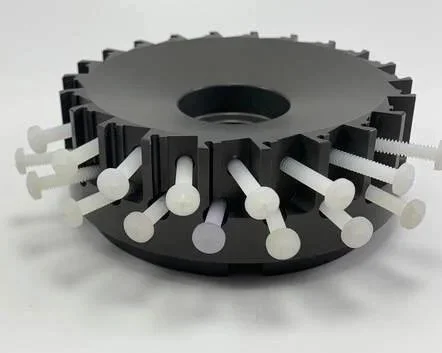
For high-volume production and parts requiring absolute seal integrity, titanium or nylon screws are often utilized. These materials are inert in the anodizing bath and does not draw current away from the aluminum part. By physically threading a screw into a hole, the threads are completely isolated from the electrolyte, ensuring they remain bare and within tolerance.
This does increase the risk of acid run’s at the hole locations and requires extra care and rinsing steps.
Nylon and Silicone Plugs
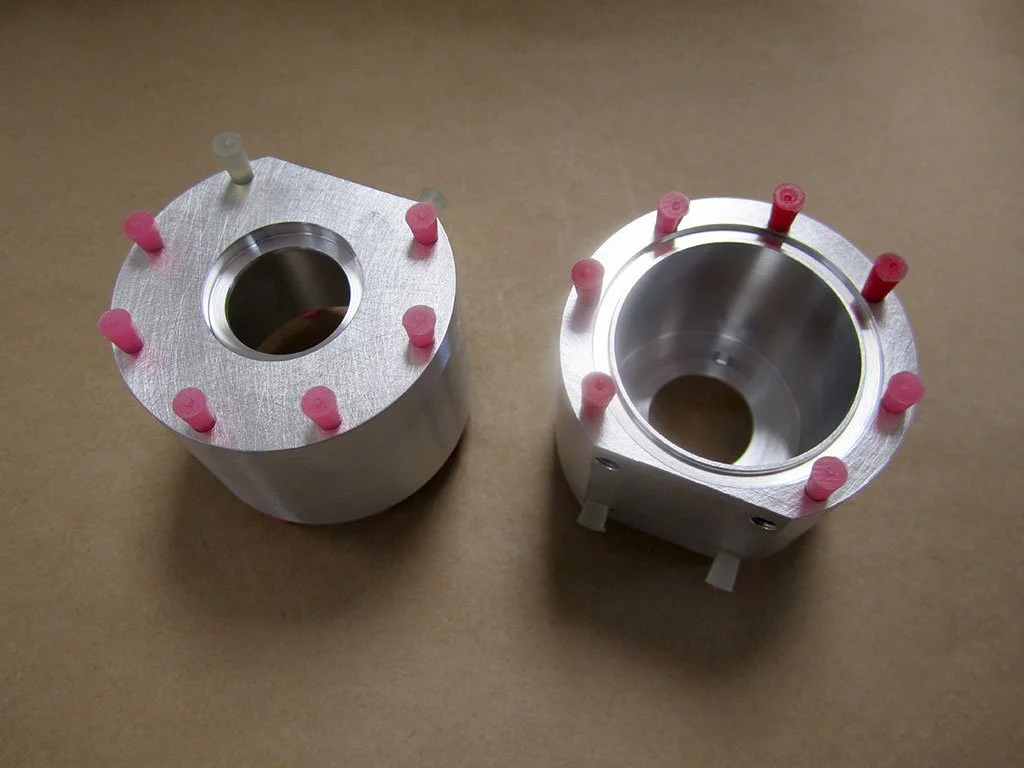
Nylon and silicone offer a flexible alternative to rigid fasteners. These materials are particularly effective for smooth-bore holes or tapered cavities. Nylon provides a rigid, durable seal that resists the caustic nature of the pre-treatment tanks, while silicone offers superior conformability for irregular shapes.
Surface Isolation: The Versatility of Specialized Taping
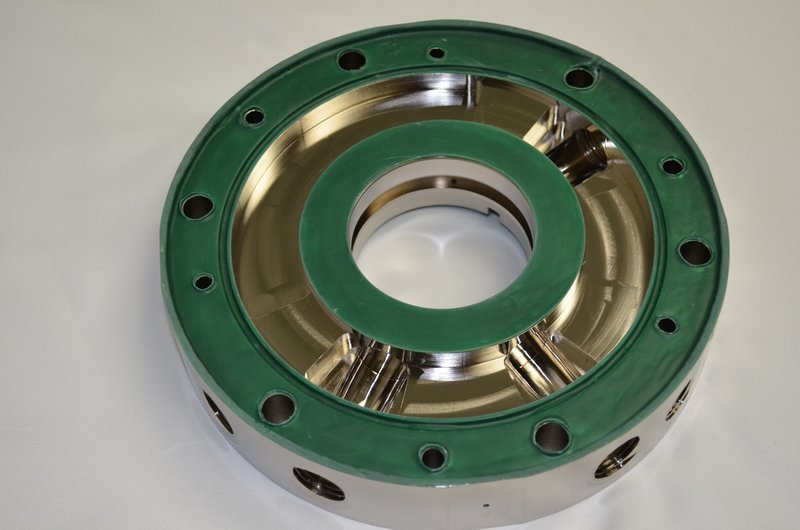
When dealing with flat surfaces, complex exterior contours, or large "keep-out" zones, specialized masking tape is the tool of choice. This is not standard industrial tape; these are high-performance polyester tapes designed to withstand extreme pH levels and temperature fluctuations.
Tape masking is one of the most labor-intensive aspects of metal finishing. The tape must be cut to precise shapes and applied with consistent pressure to avoid air bubbles. In complex parts where tape must follow a 3D radius or an intricate "honeycomb" pattern, the skill of the technician is the primary factor in the success of the finish.
The Human Element: Manual Mastery in Masking
Currently, masking at Alberta Base Anodizing is a 100% manual process. While the manufacturing world is increasingly moving toward automation, the tactile sensitivity and visual inspection required for masking complex parts remain difficult to replicate.
Every piece of tape is hand-laid, and every screw is hand-torqued. This manual approach allows for real-time quality control. A technician can feel if a thread is cross-threaded or see if a piece of tape has a microscopic lift that could lead to a leak. This attention to detail is what defines our partnership approach with our clients; we treat every complex part with the same precision that went into its machining.
Future Innovation: The Move Toward Co-Bot Automation
While manual masking is currently the gold standard for quality, Alberta Base Anodizing is committed to technological evolution. One of the most repetitive and ergonomically taxing tasks in the masking department is the insertion of screws into high-density hole patterns.
We are currently developing a system to automate hole masking using a small co-bot (collaborative robot).
Precision Torque Control: The co-bot can ensure that every nylon or titanium screw is seated to the exact same depth and torque, reducing the risk of human error.
Efficiency for High-Volume Runs: Automation will allow our skilled technicians to focus on the more intricate tape masking tasks while the co-bot handles the high-volume plugging requirements.
Target Implementation: We anticipate having this co-bot system fully operational and integrated into our workflow by late 2026.
This investment in automation is not a replacement for human expertise but an augmentation of it, allowing us to maintain competitive lead times without sacrificing the precision our clients expect.
The Partnership Approach: Masking Drawings and Collaboration
To achieve the best results, masking should be considered during the design phase, not as an afterthought. We encourage our clients to provide detailed masking drawings or CAD files that clearly define:
Critical Surfaces: Areas that must remain bare.
Toleranced Holes: Specific threads or bores that cannot tolerate coating thickness.
Grounding Points: Locations required for electrical conductivity.
By working closely with our team, clients can ensure that their complex parts are processed correctly the first time. Our expertise in masking allows us to advise on the best materials and methods for each specific application, whether it involves aluminum coating for aerospace or industrial machinery.
Technical Specifications and Compliance
All masking procedures at Alberta Base Anodizing are designed to meet or exceed industry standards, including:
MIL-A-8625: Standard for Anodic Coatings for Aluminum and Aluminum Alloys.
MIL-DTL-5541: Often used in conjunction with masking when a part requires both anodizing and chemical conversion coating (Alodine) on different sections.
ASTM B580: Standard Specification for Anodic Oxide Coatings on Aluminum.
Conclusion
Masking is the "invisible" half of the anodizing process. While the final color and texture of the anodized surface receive the most attention, it is the masked areas that often determine the functional success of a complex part. Through a combination of meticulous pre-cleaning, high-grade plugging materials, and the artisanal skill of manual tape application, Alberta Base Anodizing ensures that every part meets its engineering intent.
As we look toward 2026 and the integration of co-bot automation, our focus remains on the precision and attention to detail that our partners rely on. Whether your project involves a single prototype or a high-volume production run, our masking expertise provides the protection your complex parts deserve.
For more information on our capabilities or to discuss a specific masking requirement for your next project, visit our contact page or explore our gallery to see examples of our precision work.