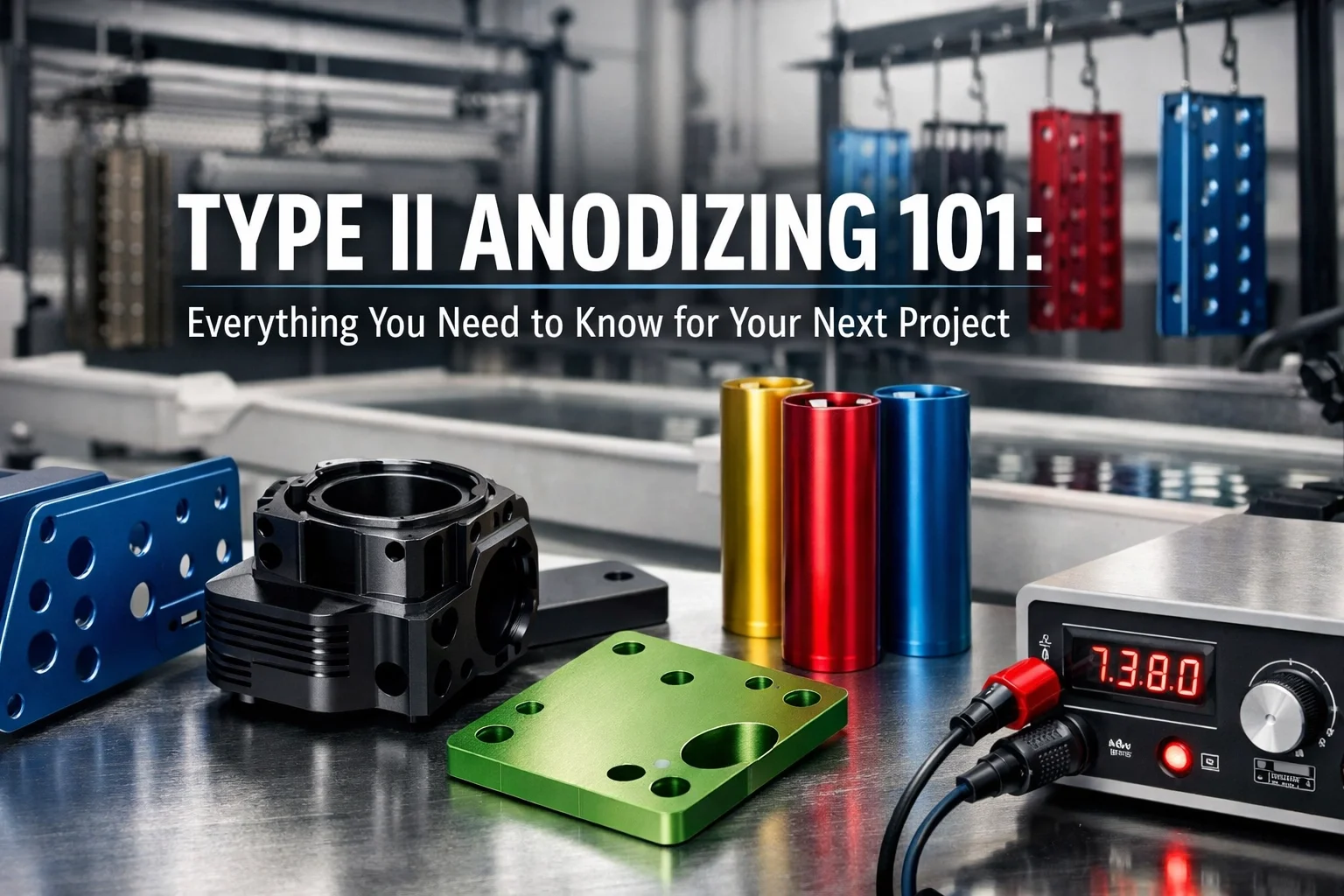
Type II Anodizing 101: Everything You Need to Know for Your Next Project
Type II anodizing is the workhorse of the aluminum finishing industry. It's the electrochemical process that transforms raw aluminum parts into corrosion-resistant, durable components by building up a protective aluminum oxide layer on the surface. If you've ever specified anodized parts for aerHow you add images to blog posts depends on the platformospace, automotive, electronics, or architectural projects, there's a good chance you were working with Type II. It's the most common anodizing method for a reason: it strikes the sweet spot between performance, cost, and versatility.
Understanding Type II anodizing helps you make better decisions when specifying finishes, communicating with suppliers, and ensuring your parts meet performance requirements without overspending on unnecessary coating thickness or hardness.
What Makes Type II Anodizing Different
Type II anodizing, formally designated under MIL-A-8625 (now superseded by MIL-DTL-5541), uses a sulfuric acid electrolyte bath to create an oxide layer that's integral to the aluminum substrate. Unlike paint or plating, this coating won't chip or peel because it's literally part of the base metal. The process converts the outermost aluminum surface into aluminum oxide through controlled electrochemical reactions.
The resulting coating typically measures between 0.00007 and 0.0010 inches (1.78 to 25.4 microns) thick: substantial enough to provide excellent corrosion protection and wear resistance, but not so thick that it significantly alters part dimensions or becomes cost-prohibitive for high-volume production runs.
The Three-Phase Type II Process
Pre-Treatment: Setting the Stage
Before any anodizing happens, parts undergo thorough cleaning and etching. This phase removes the natural oxide layer that forms on all aluminum exposed to air, eliminates oils and contaminants from machining operations, and smooths surface imperfections like extrusion lines. Parts are immersed in heated caustic soda (sodium hydroxide) solution, which etches the surface uniformly. Multiple rinses follow to ensure complete removal of cleaning chemicals. Skipping or rushing pre-treatment is the fastest way to get uneven coating thickness or adhesion problems.
Anodizing: Building the Oxide Layer
The actual anodizing phase happens in a controlled sulfuric acid bath maintained at 65-75°F (18-24°C). The aluminum part becomes the anode (positive electrode) in an electrical circuit, with an inert cathode material completing the circuit. When direct current flows through the bath, oxygen ions migrate to the aluminum surface and bond with aluminum atoms, growing the oxide layer outward from the base metal.
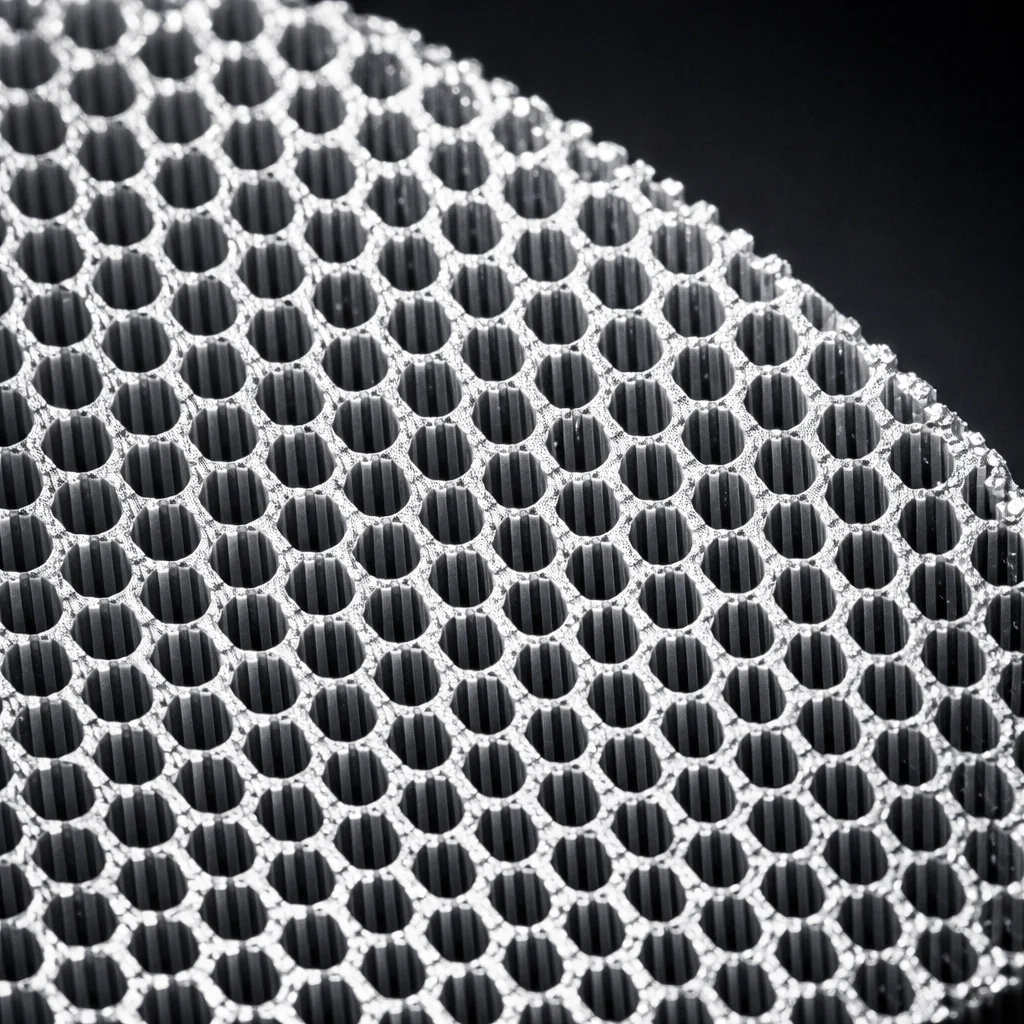
Current density typically runs 12-18 amps per square foot, and the process duration ranges from 20 to 60 minutes depending on target thickness. The oxide layer grows with a characteristic porous structure: millions of microscopic hexagonal cells perpendicular to the surface. These pores are critical for the next phase.
Post-Treatment: Sealing and Color
After removal from the anodizing bath and thorough rinsing, parts enter the post-treatment phase. For decorative applications requiring color (Class 2 coatings), organic or inorganic dyes are absorbed into the porous oxide structure. The final critical step is sealing: immersion in near-boiling deionized water or mid-temperature nickel acetate solutions causes the pores to swell and close through hydration reactions. Proper sealing prevents future corrosion and locks in any dyes. Unsealed Type II coatings will absorb contaminants and may show staining or corrosion in service.
Key Technical Specifications
Understanding the numbers behind Type II anodizing helps you specify correctly and evaluate supplier capabilities:
Coating Thickness Range: 0.00007 to 0.0010 inches (1.78 to 25.4 µm)
Bath Temperature: 65-75°F (18-24°C)
Current Density: 12-18 Amps per square foot
Process Duration: 20 to 60 minutes
Dielectric Strength: 800 volts per 0.001" thickness
Coating Hardness: Softer and more porous than Type III, but significantly harder than uncoated aluminum
Temperature control is non-negotiable. Higher bath temperatures produce softer, more porous coatings that accept dye well but offer less wear resistance. Lower temperatures shift toward harder, denser coatings but limit color options.
Benefits That Matter for Real-World Applications
Corrosion Protection
The aluminum oxide layer provides excellent barrier protection against atmospheric corrosion, salt spray, and many chemicals. Because the coating is integral to the substrate rather than applied on top, it won't delaminate or peel. Parts properly processed and sealed routinely pass 1,000+ hour salt spray testing.
Electrical Insulation
Type II coatings function as effective electrical insulators with dielectric strength of approximately 800 volts per mil of thickness. This makes anodized parts suitable for electrical enclosures, standoffs, and heat sinks where metal-to-metal contact must be prevented.
Aesthetic Versatility
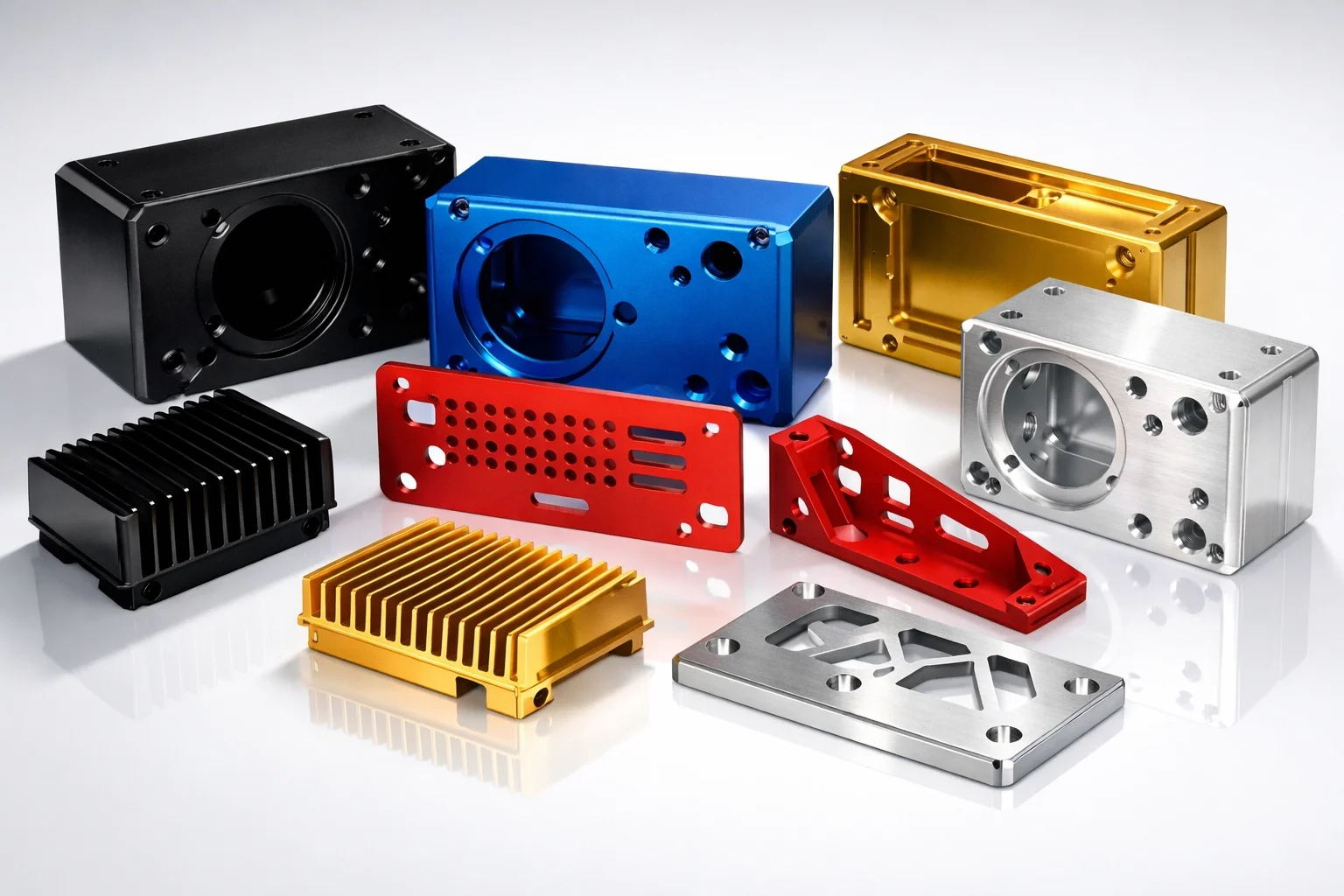
The porous structure accepts dyes in virtually any color: black, red, blue, gold, bronze, and custom matches. Clear anodizing (Class 1) maintains the natural aluminum appearance while providing protection. This combination of function and aesthetics makes Type II ideal for consumer electronics, architectural components, and branded products.
Dimensional Stability
Unlike paint or powder coating that adds thickness on top of the part, anodizing grows 50% inward and 50% outward from the original surface. A 0.0005" thick coating only adds about 0.00025" to external dimensions: negligible for most applications and easily accommodated in tolerancing.
Enhanced Adhesion
The porous oxide structure provides an excellent substrate for primers, adhesives, and secondary coatings. Many aerospace and defense specifications call for anodizing as a pre-treatment before painting.
Where Type II Anodizing Gets Used
Aerospace and Defense
Structural components, avionics housings, control panels, and fasteners rely on Type II for corrosion protection without adding significant weight. Many mil-spec parts call out Type II specifically.
Electronics and Telecommunications
Enclosures, heat sinks, chassis, and connector bodies use Type II for electrical insulation, EMI shielding enhancement, and corrosion protection in equipment deployed outdoors or in harsh environments.
Automotive and Transportation
Trim components, wheels, suspension parts, and under-hood components benefit from Type II's corrosion resistance and aesthetic options.
Architectural and Construction
Window frames, curtain wall systems, door hardware, and decorative panels use Type II for long-term weather resistance combined with color options that maintain appearance for decades.
Consumer Products
Everything from camera bodies to flashlights to sporting goods equipment uses Type II anodizing for scratch resistance, corrosion protection, and premium appearance.
Understanding Type II Classes
Type II anodizing breaks into two classes based on appearance and intended use:
Class 1 (Clear/Natural): Unsealed or lightly sealed coatings that maintain the natural aluminum appearance. Used where appearance isn't critical or where subsequent painting will occur. Less corrosion protection than Class 2 due to open pores.
Class 2 (Dyed): Sealed coatings with or without dye. Provides maximum corrosion protection and accommodates any color requirement. The sealing step closes the pores and locks in dyes for long-term color stability.
A less common variant, Type IIB, produces thinner coatings (0.00002 to 0.0007 inches) and serves as a non-chromate alternative to Type I chromic acid anodizing for applications with tight dimensional tolerances or where subsequent forming operations are required.
When Type II Makes Sense for Your Project
Choose Type II anodizing when you need:
Moderate corrosion and wear protection for general-purpose applications
Color options for branding or product differentiation
Electrical insulation properties
Cost-effective processing for medium to high production volumes
Coating thickness that won't significantly impact part dimensions or threaded features
An environmentally preferable alternative to chromate conversion coatings
Type II hits the sweet spot for the majority of aluminum finishing applications. It's not the hardest coating available (that's Type III hardcoat), and it's not the thinnest (that's Type IIB or chromate conversion), but it delivers the best balance of properties for the broadest range of applications.
Ready to specify Type II anodizing for your next project? Understanding these fundamentals helps you communicate clearly with finishing suppliers and ensures your parts come back meeting performance requirements. In the next posts in this series, we'll dive deeper into specific aspects of Type II: from color selection and specification considerations to quality control and common troubleshooting scenarios.
If you have questions about Type II anodizing for a specific application, reach out to our team to discuss your requirements and get a quote.